
Map the work before drawing cabinets
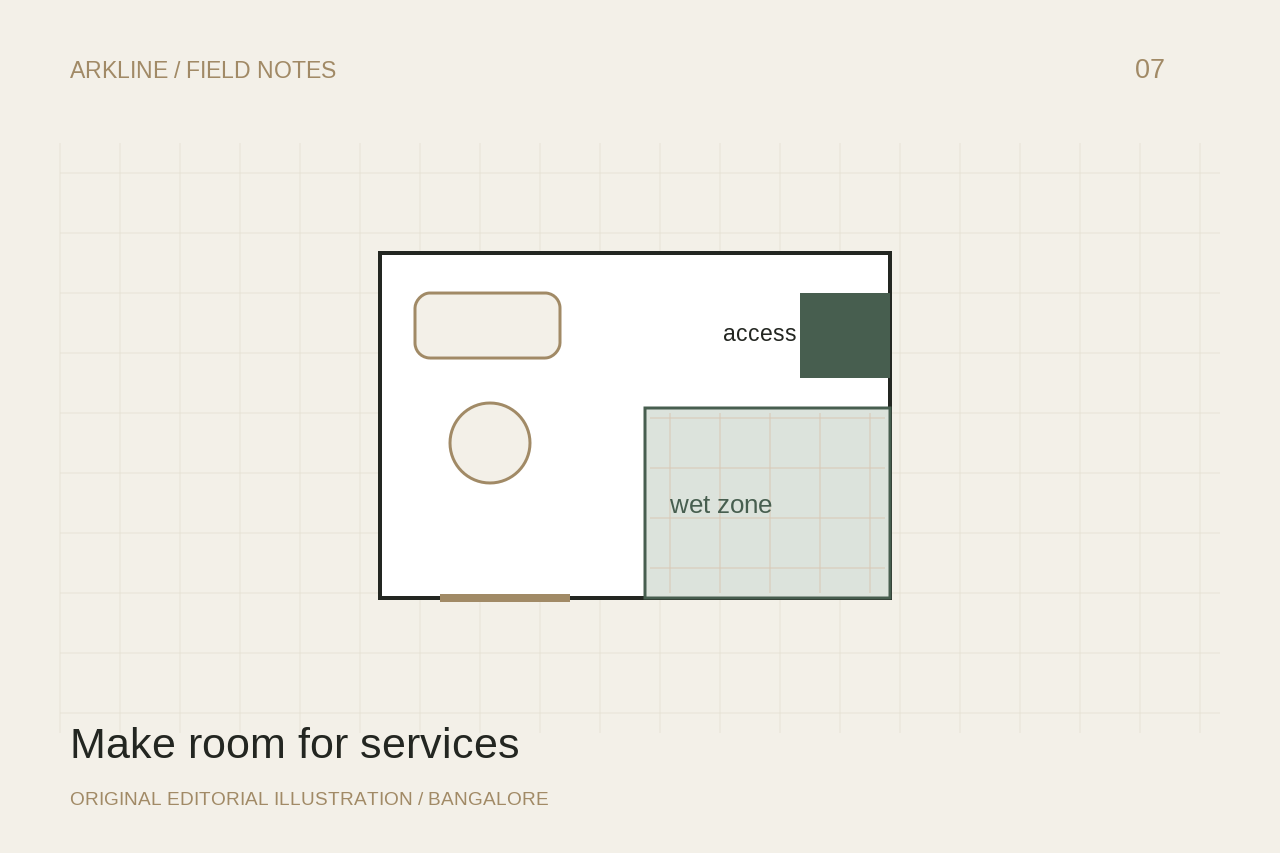
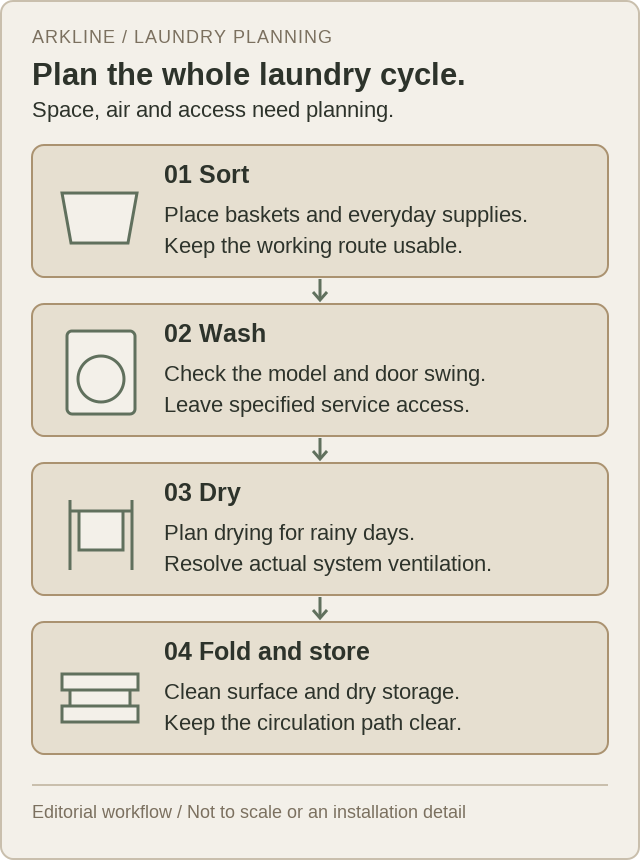
Follow one basket from entry to cupboard. Decide where dirty clothes are dropped, where colours or delicate items are separated, where detergent is kept, where a machine door opens, and where wet clothes go next. Include a clear place to fold or temporarily hold clean laundry. Allow space for a basket while the appliance door is open, and keep the route to drying and storage usable.
Write down who uses the space and whether laundry happens in small daily loads or fewer larger cycles. Note stairs, balcony routes, pets, children, hand-washing, ironing and where a drying rack can be moved without narrowing a passage. Keep the household brief separate from appliance assumptions; chosen models and manuals decide exact connections and installation requirements.
Compare drying options against real weather and use
Do not design only for a sunny balcony. Compare where clothes dry after rain, during a busy week and when a balcony is unavailable. A fixed rail, foldable rack, retractable line, drying cabinet or dryer each changes space, airflow, noise, cleaning and service needs. Ordinary air movement can help clothes dry, but it does not replace outdoor-air ventilation or solve a moisture source by itself.
| Route | Questions to resolve |
|---|---|
| Balcony or open utility | Can clothes be reached, sheltered and removed without blocking circulation? What happens during rain, dust or strong sun? |
| Indoor rail or foldable rack | Where does moist air go? Can the rack be folded away, and can damp textiles stay clear of walls, cabinetry and electrical equipment? |
| Washer plus separate dryer | What does the exact model require for ventilation, condensate collection or drainage, surrounding space and any stacking kit? Keep manuals and installer instructions with the schedule. |
| Shared or remote drying route | How will loads travel, and where can clean clothes wait without mixing them with dirty laundry or wet floor areas? |
EPA guidance identifies hanging wet laundry as an indoor moisture source and recommends controlling moisture with appropriate ventilation. If condensation, damp surfaces or musty odour appears, investigate the moisture source and ask a qualified professional to assess it. The EPA moisture guide stresses addressing the moisture source. Discuss the actual outdoor conditions and room with the designer; circulation alone is a different task from moisture removal.
Reserve the exact appliance and service access
Record appliance make, model, dimensions, door swing, controls, inlet, drain, power connection, filter access and service path before approving cabinets. Measure the route into the home as well as the final niche. Leave the appliance manual available to the designer and installer; a generic “washing machine space” is not a complete specification.
If a washer and dryer may be stacked, confirm compatibility with the exact pair and the manufacturer’s kit. Samsung’s US installation guidance, for example, says only matching models should be stacked and that the required kit and space depend on the manuals. This is a product-specific example; the selected appliance’s local-market manual controls the actual arrangement. Do not improvise brackets or lift appliances without the approved installer and equipment.
For a proposed dryer, ask whether the exact model uses an outdoor exhaust duct, a condensate tank or a drain connection, and what room ventilation it requires. Keep shut-off points, drain connections, filters and service panels reachable. Cabinets should not trap a leaking hose or force a technician to dismantle unrelated joinery for routine service. Ask a qualified electrician, plumber or appliance installer to confirm the actual connection, drainage, earthing, ventilation and safety requirements for the selected models.
Turn the routine into a room schedule
Write one schedule row for the laundry: users, basket path, machine models, drying route, rainy-day fallback, folding surface, storage, ventilation approach, service access and unresolved decisions. Record what is measured, what is assumed and who must confirm it before ordering cabinets.
Illustrative family brief: a four-person household washes most evenings and air-dries delicate clothes indoors during rain. The schedule reserves a washer niche, a foldable indoor rack that can clear the passage, a reachable service zone, a lidded sorting basket and a folding counter. The family agrees that damp laundry cannot stay against a closed cabinet and that the designer will show where moist air leaves the room. If a dryer is added later, the exact model and manufacturer installation guide must be reviewed before changing joinery.
At handover, keep appliance manuals, serial numbers, connection photographs, filter locations, approved cleaning products and the final cabinet drawing. If a leak, repeated condensation, damaged cable or unusual appliance noise appears, stop unsafe use and arrange qualified inspection rather than hiding the symptom with a new shelf or sealant.
Take this to your next meeting
Your site checklist
- Map sorting, washing, drying, folding and storage as one household route.
- Plan a rainy-day drying option and a safe place for damp textiles.
- Reserve exact appliance models, door swings, connections and service access.
- Ask qualified installers to confirm water, drain, power, ventilation and stacking requirements.
- Plan moisture removal and keep damp textiles clear of cabinetry and electrical equipment.
- File manuals, model numbers, connection photos and the approved laundry schedule.
Common questions
Can I dry clothes inside a utility room?
You can plan for indoor drying, but account for the moisture it adds. Provide an appropriate ventilation approach, keep damp fabric clear of walls and cabinets, and investigate condensation or musty odour instead of assuming a fan solves it.
Can any washer and dryer be stacked?
Do not assume that. Check the exact manuals and a compatible manufacturer kit; appliance pairs, dimensions and installation requirements vary. Have the approved installer handle the arrangement.
Should the laundry area have built-in cabinets?
Cabinets help storage, but fix them after the workflow, appliance access, drying route, moisture control and service path are agreed. Keep shut-off points, filters and repair interfaces reachable.
Reading notes
Sources & further reading
Checked on the dates below. Official requirements and documents can change; confirm the version that applies to your site.
- US EPA: Energy, Weatherization and Indoor Air Quality Accessed 19 November 2026
- US EPA: A Brief Guide to Mold, Moisture and Your Home Accessed 19 November 2026
- Samsung: Install a Samsung washing machine in your home Accessed 19 November 2026